
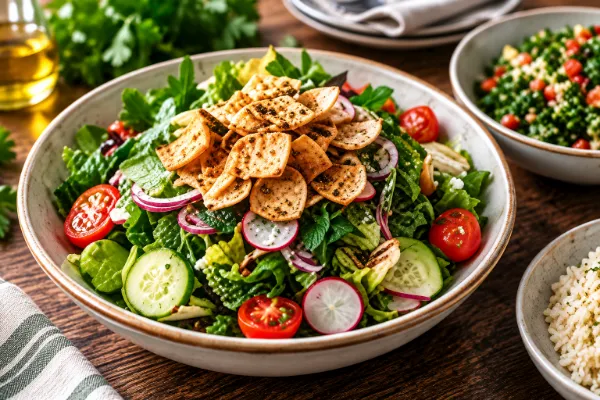
 Mediterranean food is known around the world for fresh vegetables, olive oil, grains, herbs, grilled proteins, beans, and flavorful dishes made from relatively simple ingredients.
While every restaurant and every meal is different, many traditional Mediterranean foods naturally include the kinds of ingredients people often look for when trying to build a balanced meal.
The appeal is not simply about eating less. Mediterranean cooking is often about combining different foods in reasonable portions and allowing fresh ingredients and seasonings to provide the flavor.
Vegetables Play a Major Role
Vegetables are found throughout Mediterranean cooking.
Tomatoes, cucumbers, onions, parsley, peppers, lettuce, eggplant, radishes, and other vegetables frequently appear in salads, sides, dips, sandwiches, and entrées.
A traditional fattoush salad, for example, combines vegetables, greens, herbs, and toasted pita. Tabbouli relies heavily on parsley along with tomato, mint, and bulgur.
Instead of treating vegetables as an afterthought, Mediterranean meals often make them an important part of the plate.
Grilled Proteins Offer Plenty of Options
Mediterranean cooking includes a wide variety of grilled proteins.
Chicken kabobs, beef kabobs, lamb kufta, grilled shrimp, and shawarma can all be paired with vegetables, salads, rice, hummus, or other sides.
Grilling also creates a tremendous amount of flavor. Marinades, herbs, garlic, lemon, and spices can make grilled meats interesting without requiring thick sauces.
The result is a meal that can feel substantial while still incorporating fresh ingredients.
Beans, Grains and Legumes Add Variety
Not every part of a Mediterranean meal revolves around meat.
Chickpeas, lentils, bulgur, rice, and other grains and legumes are common ingredients.
Hummus is probably one of the most recognizable examples. Traditionally made from chickpeas and tahini, it can be served as a dip, side, or part of a larger meal.
Falafel is another familiar dish made primarily from chickpeas or fava beans along with herbs and seasonings.
Lentil soup, rice dishes, and grain-based salads add even more variety.
Herbs and Spices Do the Heavy Lifting
Mediterranean food does not need to be bland to be balanced.
Parsley, mint, garlic, lemon, oregano, sumac, cumin, paprika, and other herbs and spices provide a huge amount of flavor.
Fresh herbs can make a salad more interesting, while marinades add depth to grilled meats. Lemon provides brightness, and spices can add warmth without overwhelming the ingredients.
This emphasis on seasoning helps create meals that taste satisfying even when the ingredients themselves are relatively simple.
Balance Is Part of the Mediterranean Approach
Perhaps the biggest lesson from Mediterranean cooking is that a meal does not have to revolve around one ingredient.
A plate might include grilled chicken, rice, salad, hummus, vegetables, and pita. Each part contributes something different.
You can also adjust the meal based on your appetite. Choose more salad, add grilled protein, select different sides, or share a platter with the table.
That flexibility is one reason Mediterranean food appeals to so many different people.
Fresh Food With Plenty of Flavor
Mediterranean food has earned its reputation by combining fresh ingredients with simple preparation and plenty of flavor.
Vegetables, grilled proteins, grains, legumes, herbs, and traditional sides can all work together to create meals that are colorful, satisfying, and enjoyable.
You do not have to sacrifice flavor to choose a meal built around fresh ingredients. Mediterranean cooking has been proving that for generations.